
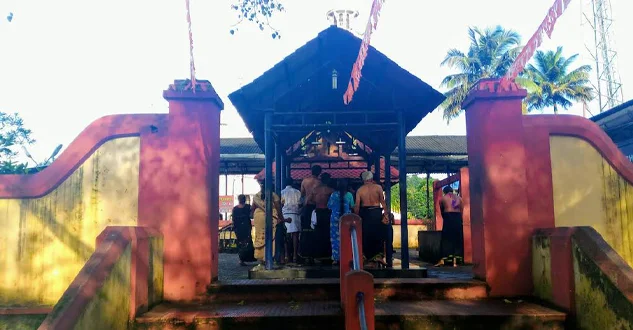
Forest Route

Forest Route Guide

Traditional 2-3 Day Forest Trekking Pilgrimage

Forest Trek: Erumely to Pampa (Via Karimala)

Stop One

Erumely Sree Vapura Swami Temple

View Map
Sree Vapura Swami Temple

Begin by visiting the Acharya Mandapam of Jagatguru Adi Shankaracharya and offer prayers at the lotus feet of the Acharya, invoking the blessings of the entire Guru Parampara of Bharata Khanda, who have revealed to us, the seekers, the path to the ultimate truth.

After offering prayers at the Acharya Mandapam, proceed to the Sreekovil (sanctum sanctorum) of Sree Vapura Swami. There, pray for the blessings for safe and successful journey to Sabarimala, holding in mind the invisible hand of Sree Vapura Swami, who carries and guides the devotees along the sacred path, having been divinely entrusted by Lord Sree Dharma Sastha (Ayyappa) to lead and protect them.

Ritual

  • Pray for blessings of Guru Parampara at Acharya Mandapam
  • Pray for the sacred hands of Sree Vapura Swami during Sabarimala pilgrimage journey.
Next Stop: Erumely Dharma Sastha Temple – Kottappadi Petta Ambalam (Kochambalam) Distance: 250 meters, Terrain: Public Road
Stop Two

Erumely Dharma Sastha Temple – Kottappadi Petta Ambalam (Kochambalam)

View Map
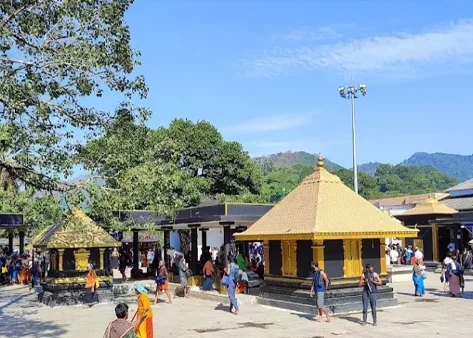
Petta Ambalam Temple

At Petta Ambalam, Ayyappa is worshipped in a dynamic, warrior-like form depicted with bow and arrow (Villali Veeran) represents the phase just after slaying Mahishi. This symbolizes, courage, victory of dharma over adharma and protection of devotees.

This form reflects Ayyappa as the active shakti in action. Spiritually, this is the beginning of the pilgrimage consciousness and devotee connects with, strength, determination and readiness for the journey.

This is the place where the shedding of ego and ignorance is celebrated. Having conquered the ego and attained inner victory, the devotee expresses this triumph through the performance of Petta Thullal. This vibrant and symbolic ritual represents the joyous celebration of overcoming the ego and ignorance. It signifies the devotee's readiness to move forward on the path of dharma, with a purified heart and a mind aligned with higher truth.
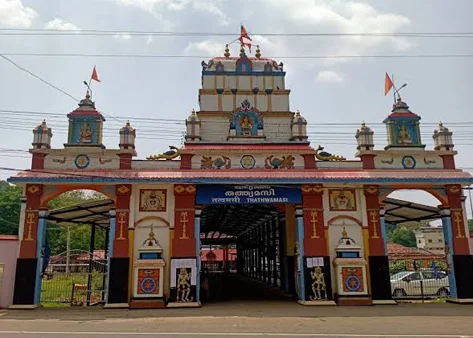
Folklore Narrative – Erumely Petta Thullal

The tradition of Petta Thullal is rooted in the popular belief that after defeating Mahishi, Sree Ayyappan reached Erumely in a state of joyful victory. In that divine moment, He is believed to have celebrated with the local and tribal communities, expressing His triumph through a spontaneous and ecstatic dance.

Devotees today re-enact this sacred event through Petta Thullal—not as a codified ritual, but as a vibrant act of collective remembrance of this divine history. Participants adorn themselves in a distinctive, symbolic manner: carrying vegetables, Sarakkol (decorated sticks), Panal Chappu, and traditional weapons such as sword and gadha; wearing a black katcha tied around the waist; and applying sindoor/ashes over the body, reflecting a raw, primal, and uninhibited devotional expression.

Following this energetic and symbolic Petta Thullal dance, the devotees proceed in the same attire and spirit toward the Valiyambalam, carrying forward the essence of victory, surrender, and unity as they continue their sacred journey.

Important Note

Generally, all Kanni Ayyappas (first-time pilgrims) perform Petta Thullal. Before participating in the ritual, the Irumudikettu is reverentially placed on a 'Viri' (a clean folded bed sheet is called 'Viri') in a safe location. After completing Petta Thullal and visiting the Valiyambalam, the Irumudikettu is respectfully lifted and placed back on the head to continue the sacred journey.

Ritual

Perform Petta Thullal (victory dance), a ritual dance, symbolizing victory over ego.

Next Stop: Erumely Dharma Sastha Temple – Valiyambalam Distance: 600 meters, Terrain: Public Road
Stop Three

Erumely Dharma Sastha Temple – Valiyambalam

View Map
Valiyambalam Temple

As the spiritual journey deepens, the devotee gradually sheds the remaining traces of ego, cultivating humility, surrender, and inner clarity. This transformation is not merely ritualistic; it unfolds at a profound psychological and spiritual level, marking a transition from self-centeredness to true self-realization.

Here, the devotee begins to discipline and condition both mind and body. In this sacred process, he worships Lord Ayyappa in His youthful form as Dharma Sastha, invoking the divine grace needed to dissolve the ego, the false sense of individual self.

Valiyambalam

After the sacred Petta Thullal at Kochambalam, devotees proceed to the Valiyambalam in the same attire, carrying forward the spirit of victory and surrender.

Upon reaching Erumely Valiyambalam, devotees first perform pradakshinam (circumambulation of the temple), symbolizing reverence and alignment with the divine presence of Sree Ayyappan.

Following this, they gradually discard the external symbols used during Petta Thullal—retaining only the Sarakkol and the black katcha tied around the waist. They then take a ritual bath, cleansing themselves of sindoor and other colors worn during the dance. This act of cleansing signifies a deeper inner transformation; Shedding of ego and outward identity, transition from celebration to contemplation and preparation for the inward spiritual journey.

In this purified state, devotees enter the Valiyambalam and offer prayers, seeking not worldly gains, but the higher meaning of life and spiritual realization.

Ritual

Pray for helping remove final traces of 'ego' and align with Lord Ayyappa.

Next Stop: Forest Trek Begins

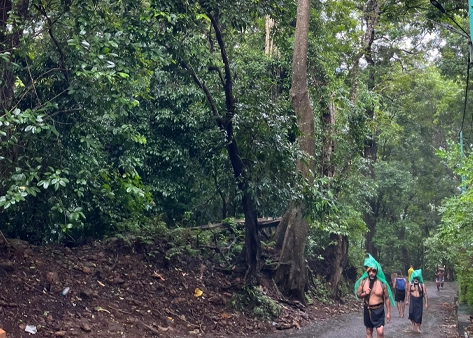
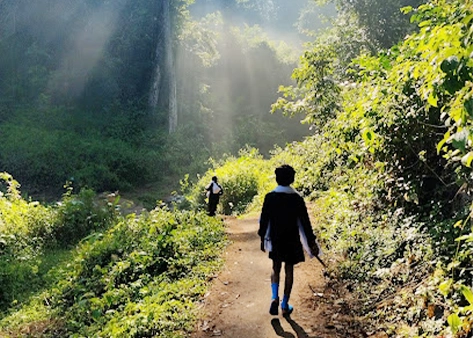
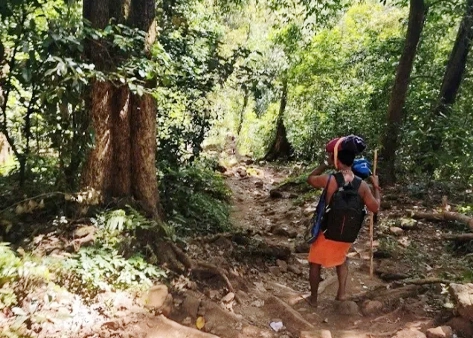
Next stop: Perur Thodu. Distance: 3-4 km, Time: 1 to 1.5 Hours, Terrain: Mixed forest and settlement edge section, Earthen path with short rocky patches, Mostly flat terrain with mild elevation gain

Stop Four

Perur Thodu

View Map
Perur Thodu Forest Path

This is the place where the transformation from individual identity to spiritual identity begins. In everyday life, identity is layered—comprising name, caste, profession, wealth, education, status, and various roles such as father, manager, or student. At this stage of the Sabarimala pilgrimage path, all of these are consciously set aside. No one is addressed by their personal name; instead, everyone is called "Swami" (or "Ayyappa").

This shift is powerful, as it replaces who you are socially with what you are spiritually—a true seeker.

Ritual

Transform as a spiritual person and be identified as 'Ayyappa'

Stop Five

Irumboonnikkara

View Map
Irumboonnikkara Forest Path

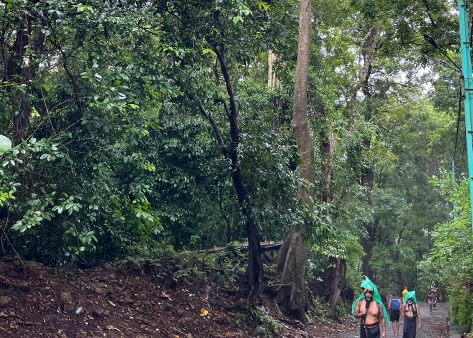
This is the stage where the pilgrim begins to experience physical strain and inner testing, deepening endurance and spiritual awareness. At Irumboonnikkara, the path becomes more demanding, requiring steadiness and resolve. It is traditionally believed that Sree Ayyappan passed through this route, sanctifying it with His presence.

Along this stretch, devotees also have darshan at the shrines of Shiva and Subramanya, seeking strength, protection, and guidance for the journey ahead.

As fatigue sets in, the pilgrim continues with determination, chanting "Swamiye Saranam Ayyappa", transforming effort into devotion. This stage marks the shift from determination to endurance and surrender, where inner strength begins to prevail over physical limitation.

Ritual

Offer prayer at Mahadeva and Subramanya Temples

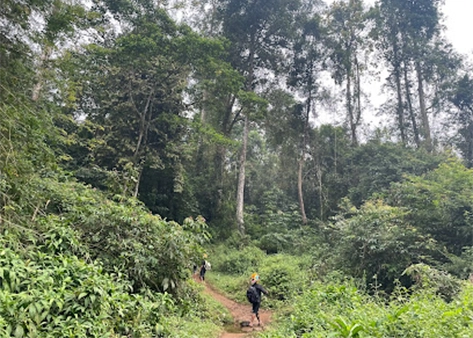
Next Stop: Kalaketti Distance: 4-5 km, Time: 2-2.5 Hours, Terrain: Hilly forest-road
Stop Six

Kalaketti

View Map
Kalaketti Forest Path

This is the place where the resolve of the pilgrim is reaffirmed and the commitment to the path is strengthened. At Kalaketti, the journey begins to demand greater physical and mental endurance, marking a deeper step into discipline and devotion. Lord Ayyappa rested here during his journey, giving this halt deep sacred significance.

In everyday life, determination is often influenced by comfort, convenience, and external motivation. Choices are flexible, and commitment can waver in the face of difficulty. At this stage of the Sabarimala pilgrimage path, the pilgrim consciously embraces firmness of purpose. Pilgrims break coconuts here and offer prayers as an act of devotion and surrender. The terrain becomes more challenging, and the body begins to feel the strain, yet the chant of "Swamiye Saranam Ayyappa" continues, reinforcing inner strength and focus.

This shift is significant, as it transforms casual intention into unwavering resolve, where the pilgrim moves from simply participating in the journey to truly committing to it as a path of discipline and spiritual perseverance.

Ritual

  • Break coconut
  • Pray in devotion and surrender
NIGHT HALT: Kalaketti is ideal for night halt.
Next Stop: Azhutha River Distance: 2-3 km, Time: 1-1.5 Hours, Terrain: Dense forest, earthen + rocky patches
Stop Seven

Azhutha River

View Map
Azhutha River

This is the place where the pilgrim confronts effort, burden, and surrender in a direct way. At the Azhutha River, the journey demands physical exertion and inner endurance.

In everyday life, burdens are often avoided and comfort is prioritized. At this stage of the Sabarimala pilgrimage path, the pilgrim accepts hardship. The descent, sacred river crossing, and steep climb test resilience and faith.

Pilgrims carry a stone from the river, called 'Azhutha Kallu', to Kallidumkunnu, symbolizing accepting and offering one's burden. This stage marks a shift, where hardship is embraced, transforming effort into growth.

Folklore Narrative – Azhuthakallu

According to traditional belief, the demoness Mahishi, though slain by Sree Ayyappan, had once received a powerful boon: that at her will, each hair follicle of her body could give rise to another Mahishi of equal strength to confront her enemies. After her defeat, it is believed that her body was cast into the valley. Devotees hold that care must be taken to ensure that it does not resurface, for if it were to rise again, countless Mahishis could emerge from her, symbolizing the resurgence of destructive forces.

As part of this folklore tradition, pilgrims collect a stone from the sacred Azhutha River and carry it along their journey. Upon reaching Kallidamkunnu, believed to be the site where Mahishi was destroyed and her remains subdued, they place or throw the stone there.

This act is deeply symbolic; it signifies the devotee's participation in the containment of evil and negativity, it represents the burden of inner impurities carried and consciously discarded and it reflects a collective resolve to ensure that negative tendencies do not rise again within oneself.

Thus, the offering of the stone—known as Azhuthakallu—is not merely a physical act, but a spiritual gesture of purification, discipline, and commitment to the path of Dharma.

Ritual

Pray and collect 'Azhutha Kallu', a stone, from Azhutha river to be deposited at Kallidamkunnu.

Next Stop: Azhutha Hill Distance: 2-3 km, Time: 1-1.5 Hours, Terrain: Steep uphill trekking stretch
Stop Eight

Azhutha Medu (Hill)

View Map
Azhutha Medu Hill

This is the place where the pilgrim deepens determination and inner focus. At Azhutha Hill, the ascent calls for steadiness and resolve.

In everyday life, challenges are often met with hesitation or distraction. At this stage of the Sabarimala pilgrimage path, the pilgrim stays focused on the path, supported by continuous chanting and faith. Each step reflects consistency and commitment.

This stage signifies perseverance, where focus and determination guide the pilgrim forward.

Ritual

Renew commitment to Lord Ayyappa.

Next Stop: Kallidumkunnu Distance: 1 km, Time: 30 minutes
Stop Nine

Kallidumkunnu

View Map
Kallidumkunnu

This is the place where the pilgrim symbolically releases the burden carried along the journey. At Kallidumkunnu, the act of offering marks an important inner shift.

In everyday life, burdens are often accumulated and carried without conscious release. At this stage of the Sabarimala pilgrimage path, the pilgrim places the stone carried from the Azhutha River, signifying letting go of what was consciously taken up.

This act reflects surrender and release, where the pilgrim learns to lay down burdens and move forward with greater lightness.

Folklore Narrative – Kallidumkunnu

Devotees believe that after Mahishi was defeated, her remains were cast into the valley at Kallidumkunnu. As part of this sacred tradition, pilgrims collect a stone from the Azhutha River and carry it with them along the path.

Upon reaching Kallidumkunnu, the stone is placed or cast there as a symbolic act—representing the devotee's role in ensuring that Mahishi does not resurface. This act signifies the firm resolve to restrain and subdue all forces of negativity, preventing their re-emergence.

Ritual

Discard the 'Azhutha Kallu' here and feel the conscious release of burden.

Next Stop: Injipparakotta Distance: 1.5 km, Time: 1 Hour
Stop Ten

Inchipparakotta

View Map
Inchipparakotta Forest Path

This is the place where the pilgrim is reminded of alertness and mindful movement. At Inchipara, the path becomes uneven and demands attention.

In everyday life, one often moves with distraction and lack of awareness. At this stage of the Sabarimala pilgrimage path, the pilgrim proceeds with care and mindfulness. Each step is taken with awareness, supported by steady chanting and focus.

This stage signifies vigilance, where awareness and presence become essential parts of the spiritual journey.

Ritual

Have awareness and identify with Lord Ayyappa.

Next Stop: Mukuzhi Distance: 2 km, Time: 1-1.5 Hours
Stop Eleven

Mukuzhi

View Map
Mukuzhi - Sabarimala Forest Path

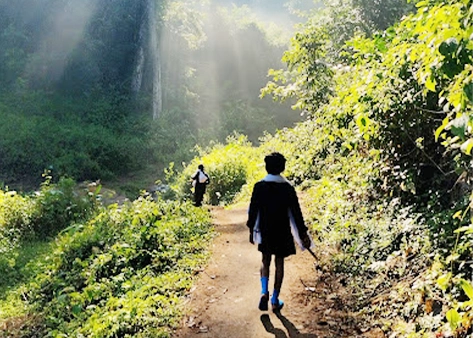
This is the stage where the pilgrim enters a phase of sustained endurance and inner steadiness on the journey toward Sabarimala. At Mukkuzhi, the path through the forest requires consistent effort and focus.

As fatigue sets in, the devotee continues with patience and determination, chanting "Swamiye Saranam Ayyappa," drawing strength from devotion.

This stage signifies the shift to steady endurance and inner discipline, where the pilgrim moves forward with focus, faith, and surrender.

Ritual

Have awareness and identify with Lord Ayyappa.

Next Stop: Karimala Distance: 2.5-3 km, Time: 1.5-2 Hours
Stop Twelve

Karimala

View Map
Karimala - Sabarimala

This is the place where the pilgrim undergoes a phase of deep endurance and inner testing. At Karimala, the journey becomes more intense, demanding sustained faith and patience.

In everyday life, prolonged challenges often lead to fatigue and loss of focus. At this stage of the Sabarimala pilgrimage path, the pilgrim continues with steady resolve, supported by constant chanting and inner strength. The path encourages persistence without distraction.

This stage signifies endurance, where unwavering faith and patience help the pilgrim move through extended trials in life.

Ritual

Offer prayers at the Kadushabdan i.e. Karimalanathan, the Bhoothagana of Ayyappa Swami. Overcome the testing of endurance here.

NIGHT HALT: Karimala is ideal for night halt.
Next Stop: Pampa Distance: 10-13 km (descent), Time: 3-5 Hours
Stop Thirteen

Pamba

View Map
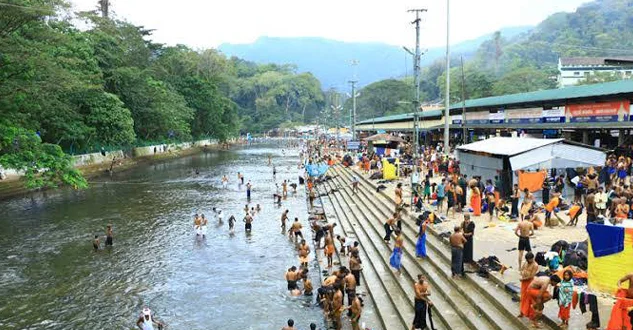
Pampa River

This is the place where the pilgrim experiences purification and renewal before the final ascent. At the Pamba River, the journey pauses for cleansing and reflection.

In everyday life, purification is often external and routine. At this stage of the Sabarimala pilgrimage path, the pilgrim bathes in the river, signifying inner cleansing and preparation for darshan. The mind becomes calmer and more focused.

This stage signifies renewal, where the pilgrim prepares to approach Lord Ayyappa with clarity and devotion.

Folklore Narrative – Pamba Snanam & Bali Tharpanam

Pamba Bali Tharpanam is an important ancestral rite performed during the pilgrimage to Sabarimala Temple at the banks of the Pamba River.

Pilgrims begin with a holy dip in the river for purification, then sit on the riverbank, usually guided by a priest or Guru. Using water, sesame seeds, darbha grass, and rice balls (bali pindam), they offer tharpanam by invoking their ancestors and pouring water through their hands while chanting mantras.

The bali pindams are offered as symbolic nourishment, and prayers are made for peace of the departed souls and removal of ancestral burdens. This ritual reflects the belief that honoring one's ancestors is essential before seeking the blessings of Lord Ayyappa. After balitharppanam, pilgrims take bath and proceed to Pampa Ganapathi temple.

Ritual

  • Self-purification by taking 'Pampa Snanam' (holy bath) and bringing clarity and devotion.
  • Bali tharppanam for the blessings of ancestors.
Next Stop: Pamba Ganapathi Temple Distance: 100 meters, Terrain: Temple premises
Stop Fourteen

Pamba Ganapathi

View Map
Karimala - Sabarimala

This is the place where the pilgrim seeks removal of obstacles before the final ascent. At Pampa Ganapathy Temple, prayers are offered to Lord Ganesha.

In everyday life, obstacles often create hesitation and uncertainty. At this stage of the Sabarimala pilgrimage path, the pilgrim offers prayers with focus and humility, seeking a clear and unobstructed path ahead. After Pamba Ganapathy, pilgrims visit Sree Rama Swami's and Anjaneya Swami's temples and seek blessings.

This stage signifies readiness—where the pilgrim prepares mentally and spiritually for the final ascent toward Lord Ayyappa.

Ritual

Pray for removing all obstacles during the final ascent to Sabarimala Sannidhanam.

Next Stop: Neelimala Distance: 5 km, Terrain: Forest trail, steep climb
Stop Fifteen

Neelimala

View Map
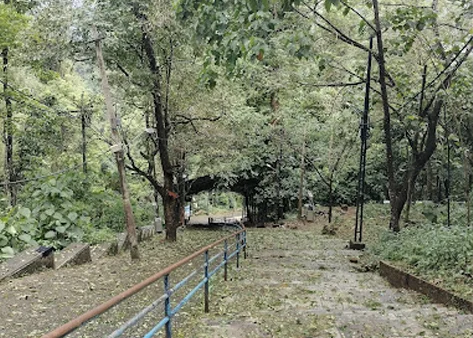
Neelimala

This is the stage where the pilgrim begins to pass through phases of focus and inner vigilance while nearing the destination. The climb demands attention, devotion, and composure.

In everyday life, one may overlook subtle challenges or move forward without awareness. At Neelimala, the journey shifts, each step is taken with greater focus and reverence, marking the transition from physical effort to mindful progress.

This stage signifies the beginning of heightened awareness, where the pilgrim consciously prepares inwardly for the sacred path ahead.

Ritual

Pray for inner vigilance and focus.

Next Stop: Appachimedu Distance: 2 km, Terrain: Forest trail
Stop Sixteen

Appachimedu

View Map
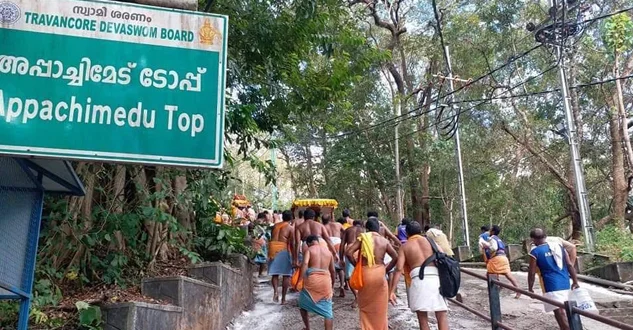
Appachimedu

At this stage of the pilgrimage, the pilgrim continues forward with awareness, humility, and devotion guiding each step.

At Appachimedu, offerings are traditionally made rice and jaggery balls, acknowledging unseen forces and seeking protection along the path of Lord Ayyappa.

This stage represents vigilance and surrender, where the pilgrim lets go of inner distractions and proceeds with clarity and reverence, moving closer to the final destination.

Folklore Narrative – Unda Eru

Throwing balls made of rice and jaggery, called 'unda' onto nearby rocks or forest area at Appachimedu is a traditional ritual performed by pilgrims on the way to Sabarimala Temple. This act is believed to be offerings to the tribal gods and to appease negative forces or spirits (Appachi), ensuring a safe and obstacle-free journey ahead.

Ritual

Throw 'unda' and pray for inner vigilance and focus.

Next Stop: Sabari Peetam Distance: 2 km, Terrain: Forest trail
Stop Seventeen

Sabari Peetam

View Map
Sabari Peetam

This is the place where the pilgrim reflects on devotion in its purest and most patient form. At Sabari Peetam, the journey pauses in remembrance of Sabari, whose unwavering devotion is revered.

In everyday life, devotion is often conditional and influenced by expectations. At this stage of the Sabarimala pilgrimage path, the pilgrim reflects on patience, humility, and sincere devotion without expectation.

This stage signifies pure bhakti, where faith is expressed with simplicity, patience, and complete surrender.

Folklore Narrative – Sabari Peetam

The sacred Sabari Peetam at Sabarimala is associated with the revered devotee Sabari, whose story is told in the Ramayana. According to tradition, Sabari lived a life of pure devotion, awaiting the darshan of Rama. When Rama arrived, she offered fruits after tasting them to ensure their sweetness—an expression of selfless bhakti, through which she attained liberation.

In the Sabarimala tradition, Sabari is believed to have performed penance in this sacred region, and Sabari Peetam marks the place sanctified by her tapas. Devotees pause here to offer prayers, reflecting on pure devotion, humility, and surrender, realizing that true devotion alone leads to the Divine.

Ritual

Pray with devotion and pure bhakti without expectations.

The black Katcha tied around the waistline is discarded at this point.

Next Stop: Saramkuthi Distance: 0.5 km, Terrain: Forest path
Stop Eighteen

Saramkuthi

View Map
Saramkuthi

This is the place where the pilgrim marks readiness for darshan and the nearing completion of the journey. At Saramkuthi, an important transition takes place.

In everyday life, actions are often carried with lingering attachments and intentions. At this stage of the Sabarimala pilgrimage path, the pilgrim discards the symbolic arrow (saram), signifying the completion of the vow and letting go of remaining weapons of intentions.

This stage signifies readiness, where the pilgrim stands prepared, free from residual burdens, to approach Lord Ayyappa.

Folklore Narrative – Saramkuthi

According to tradition, Sree Ayyappan paused at this place during His mission to defeat Mahishi and planted His arrow (saram), symbolizing resolve and divine purpose. In remembrance, first-time pilgrims (Kanni Swamis) carry arrows (sarakkol) throughout the pilgrimage and offer them at Saramkuthi, marking the fulfillment of their vow and surrender before the Divine.

At Saramkuthi, it is believed that Lord Ayyappa stations his Sivabhoothas to receive and bless devotees during the festival. On the concluding day, the Lord appears in a grand procession atop an elephant, accompanied by vibrant vadhya ghosha (the resounding music of traditional instruments). After offering a ceremonial farewell to the devotees, he symbolically leads the Bhoothaganas back to the Sannidhanam in silence, marking the solemn close of the festival.

Ritual

Discard attachments and pray with devotion and pure bhakti.

Next Stop: Thirunada Distance: 300 meters, Terrain: Temple path
Stop Nineteen

Thirunada

View Map
Thirunada

This is the place where the pilgrim reaches the sacred threshold of realization. At the Pathinettam Padi, the final ascent is made with reverence and awareness. After offering the saram at Saramkuthi, the devotee proceeds forward with a sense of surrender and fulfilment, drawing closer to the sacred sannidhanam of Sabarimala.

The next significant point is the Thirunada, the holy entrance leading to the divine presence of Sree Ayyappan. Here, devotees pause to offer their prayers to the guardian deities, Kadutha Swami, Karuppaswami, and Karuppayi Amma. These deities are revered as protectors of the sacred abode, symbolizing vigilance, strength, and the safeguarding of Dharma. Offering prayers here signifies seeking their permission and blessings before entering the sanctified presence of the Lord.

Thus, from the surrender at Saramkuthi to the reverence at Thirunada, the devotee advances with humility and devotion, prepared to receive the grace of Sree Ayyappan.

Next Stop: Pathinettam Padi Distance: 200 meters, Terrain: Temple steps
Stop Twenty

Pathinettam Padi (18 Sacred Steps)

View Map
Karimala - Sabarimala

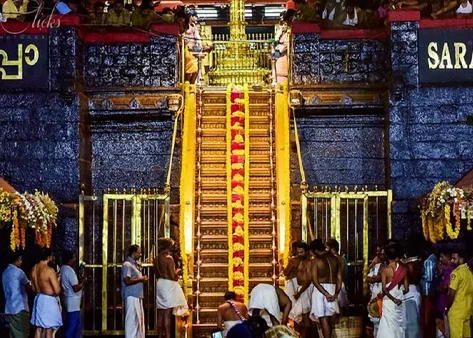
This is the place where the pilgrim reaches the sacred threshold of realization at Sabarimala. At the Pathinettam Padi, the final ascent is made with reverence and awareness. Before ascending, the devotee breaks a coconut at the designated area near the entrance to the 18 sacred steps.

In everyday life, progress is often measured in external achievements. At this stage of the pilgrimage, the devotee climbs the eighteen sacred steps with deep devotion, each step symbolizing the transcendence of human limitations, attachments, and impurities.

This stage signifies culmination, where the seeker rises beyond worldly layers to approach Sree Ayyappan with complete surrender and inner clarity.

Ritual

Before ascending the 18 sacred steps, bearing the Irumudikettu on the head, the devotee breaks a coconut, symbolizing complete surrender. With a prayerful resolve to overcome the senses and accumulated karma, each step is reverentially touched and ascended with devotion.

The Eighteen Steps Represent:

The 5 Senses
  • Shravana (Hearing)
  • Sparsha (Touch)
  • Drishti (Sight)
  • Rasa (Taste)
  • Gandha (Smell)
The 8 Passions
  • Kama (Desire)
  • Krodha (Anger)
  • Lobha (Greed)
  • Moha (Delusion)
  • Mada (Pride)
  • Matsarya (Jealousy)
  • Asuya (Envy)
  • Dambha (Hypocrisy)
The 3 Gunas
  • Sattva (Purity, harmony)
  • Rajas (Activity, passion)
  • Tamas (Inertia, ignorance)
Knowledge
  • Vidya (Knowledge)
  • Avidya (Ignorance)
Final Destination: Sabarimala Sannidhanam
Stop Twenty-One

Sabarimala Sannidhanam

The Abode of Lord Sree Dharma Sastha
View Map
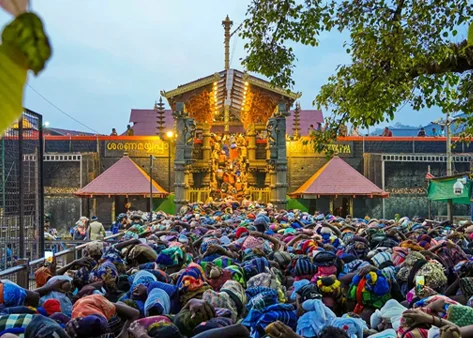
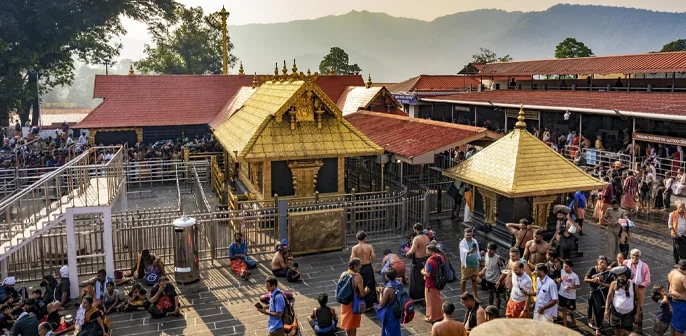
Sabarimala Sannidhanam

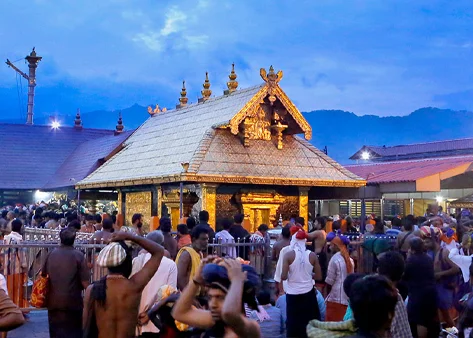
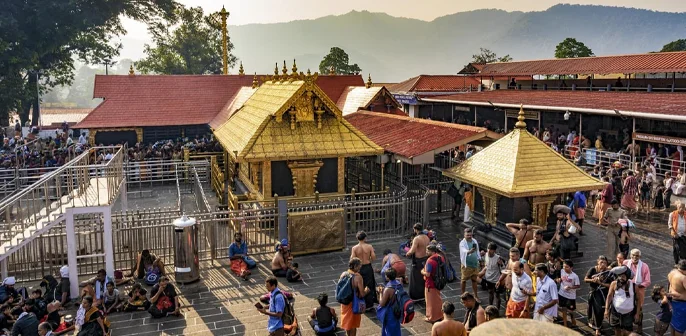
This is the moment where the pilgrim attains the goal of the journey. The hardship and prayers are finally rewarded at Sabarimala Temple and the long path culminates in the sacred darshan of Lord Ayyappa/Lord Dharma Sastha and the realization of the Lord Himself.

In everyday life, fulfilment is often sought through external achievements and desires. At this stage of the Sabarimala pilgrimage path, the pilgrim stands in the presence of the divine, experiencing stillness, clarity, and grace. The journey transforms into a moment of inner connection beyond words. That sense of being unified with the Lord makes the pilgrimage complete, and the heart and mind become pure.

This stage signifies realization, where the seeker and the sought become one, and the purpose of the pilgrimage is fulfilled in devotion and awareness.

After darshan Irumudikettu will be shifted from head to the right shoulder and once again prayer offered.

Ritual

  • Have Darshan of Lord Sree Dharma Sastha/Lord Ayyappa and experience oneness with the Divine.
  • Offer ghee for abhisheka after offering prayers at the other deities at Sannidhanam. (To offer Ney for abhisheka, open irumudikettu break the ney Thenga and pour the ghee into a vessel. This is to be taken to sannidhanam for abhisheka before the Ucha pooja (pooja at noon). In case of devotees arriving afternoon they stay at Sabarimala and abhisheka offered next day morning.)

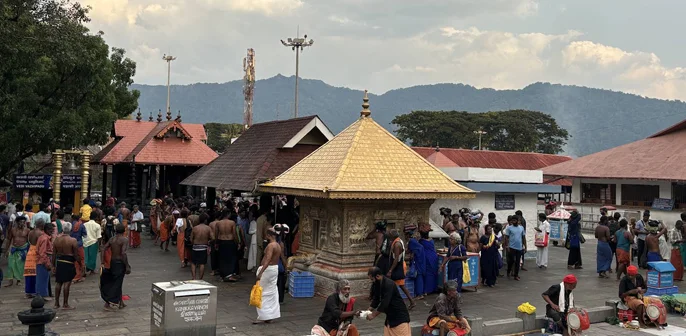
Other Deities at Sannidhanam

Kannimoola Ganapathy

Kannimoola Ganapathy

At the Sannidhanam, devotees offer prayers at Kannimoola Ganapathy, praying for the removal of all obstacles and the blessings of a righteous path.

Nagarajar

Nagarajar

After offering prayers at Kannimoola Ganapathy, devotees proceed to the Nagaraja sannidhi, the guardian deity (Kshethra Palaka), seeking blessings for protection and well-being.

Malikapuram Temple

Malikapuram Temple

This is the place where the pilgrim reflects on devotion expressed through patience and waiting. At Malikapuram Temple, prayers are offered to Malikappurathamma. Malikappurathamma is revered as a symbol of steadfast devotion and patience. Tradition holds that she awaits the call of Lord Ayyappa, representing devotion that is calm, enduring, and free from demand.

In everyday life, waiting is often filled with restlessness and expectation. At this stage of the Sabarimala pilgrimage path, the pilgrim reflects on patient devotion, offering prayers with humility and acceptance.

This stage signifies patience, where devotion continues with faith, without expectation, and with complete surrender.

Ritual

First time Ayyappas (Kanni Ayyappas) and Malikappurams (girl/woman devotees) rolls coconut here.

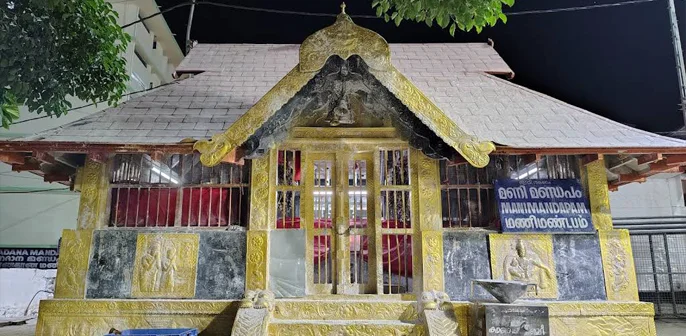
Manimandapam

Manimandapam

The Manimandapam at Sabarimala is a deeply revered and significant sacred space, believed to be the Jeeva Samadhi of Sree Ayyappan. Tradition holds that the mortal aspect of Ayyappa Swami rests here, following His divine merger into the Dharma Sastha idol at the Sannidhanam.

During the auspicious Mandala season, a special five-day pooja is conducted here, commencing after the sighting of the Makara star, associated with the sacred moment of Makara Sankranti. This period is considered highly divine, marking the culmination of the pilgrimage.

A unique and spiritually vibrant feature of these days is Kalamezhuthu, the ritual drawing of sacred images, depicting Ayyappan in various forms; As a child, As a young boy, Mounted on a tiger, As a prince and finally as Dharma Sastha on the concluding day. These visual representations are deeply symbolic and evoke profound devotion among pilgrims.

After the completion of the fifth day's pooja at the Manimandapam, the temple at Sabarimala is ceremonially closed for the season.

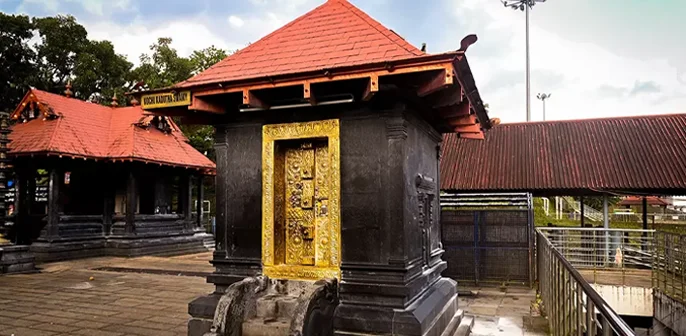
Kochukadutha Swami

Kochukadutha Swami

After offering prayers at the Nagaraja sannidhi, devotees proceed to Kochu Kadutha Swami, the guardian deity, and offer their prayers seeking protection and blessings.

Devotees may stay at Sannidhanam (basic accommodation only available) and descend to Pampa next day or descend to Pampa same day.

Return Journey

4.19 Return After Darshan

Before commencing the return journey, the devotee breaks a coconut and offers prayers once again at the sannidhanam of Sree Ayyappan. If direct darshan is not possible, prayers may be offered at the sannidhi of Malikappurathamma. Thereafter, the devotee descends the Pathinettam Padi (18 Sacred Steps) in reverse order, if permitted. If access through the sacred steps is restricted, the side staircase may be used to descend.

On reaching the Kodimaram (flagstaff), devotees turn toward Ponnambalamedu, located directly opposite the sanctum sanctorum of Sabarimala, and offer prayers. It is traditionally believed that until the first day of Makaram, the divine presence of the Lord is manifest at Ponnambalamedu.

Return to Pampa

After satisfying darshan return to Pampa.

Return Home

Option 1 Travellers

Return home from Pampa directly.

Option 2 Travellers

Return home from Pampa directly or Take Karimala forest route and return home from Erumely after visiting Vapura Swami Temple.